



According to statistics, the market for cloud computing is forecasted to be worth $947.3 billion. This is because cloud computing has quietly become the backbone of the modern digital world. Every app we open and every AI tool we use relies on cloud infrastructure working behind the scenes.
However, rather than just using it, the next generation of cloud computing will depend on it. Quantum computing and other upcoming advancements will change how businesses operate.
We shall examine the reasons why cloud computing is essential for the future in this guide. Additionally, we will go over 15 significant trends and forecasts about cloud computing’s future.
Why Cloud Computing is Important Going Forward?
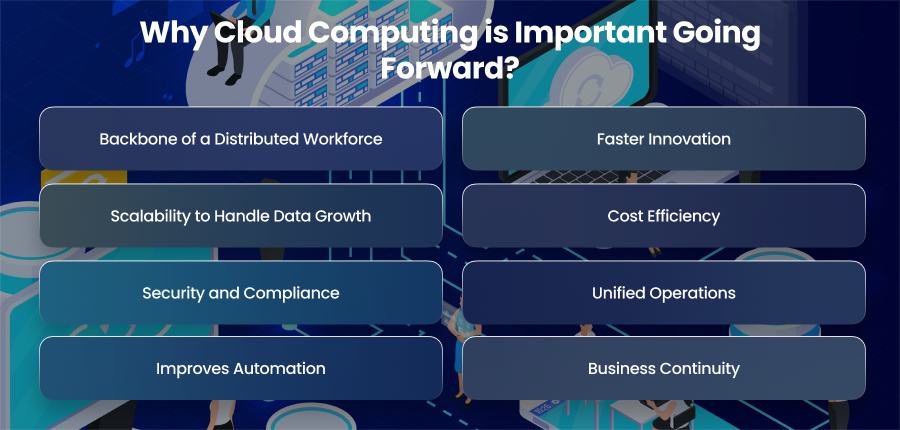
Backbone of a Distributed Workforce
Remote and hybrid work models aren’t temporary trends. They now play a vital part in how contemporary teams work. Workers are no longer restricted to a workstation. Cloud systems enable them to access data from any place. Companies may increase production by hiring workers from all around the world.
Faster Innovation
Businesses may create and implement new products via the cloud without having to deal with drawn out procurement processes or managing physical servers. Teams can create prototypes in a matter of days. For startups and tech driven companies looking to enter the market fast, this flexibility is a major competitive advantage.
Scalability to Handle Data Growth
Every app produces enormous amounts of data. Managing this data on traditional on premises infrastructure is expensive and insufficient. Elastic storage and processing power that may grow or shrink in response to demand are provided by cloud computing. This implies that companies won’t have to worry about running out of capacity while handling various workloads.
Cost Efficiency
Cost control is a top concern for companies of all sizes. Hardware purchases and continuous maintenance are less necessary when using cloud computing. Companies employ pay as you go models, where they are only charged for the resources they use, rather than paying for them up ahead. Better financial planning and reliable budgeting are made possible by this flexibility. Cloud cost optimization tools also help organizations identify waste and streamline resource usage for maximum ROI.
Security and Compliance
The complexity and frequency of cybersecurity attacks are rising. Contemporary cloud providers make significant investments in threat detection. These capabilities often exceed what organizations can build on their own. Cloud platforms also provide automated patching and disaster recovery built into their services. This significantly reduces vulnerability risks.
Unified Operations
Cloud ecosystems combine communication technology and business apps into one unified environment. Teams may collaborate in real time and exchange documents with ease. This keeps projects on track regardless of location. Cloud computing ensures that everyone works from the same version of tools and documents. This improves efficiency across teams.
Improves Automation
AI and machine learning require massive computing power. This is available to all businesses thanks to the cloud. Cloud platforms offer the performance required to train machine learning models or deploy AI applications.
Business Continuity
Businesses that only employ on-premises servers may be severely impacted by unforeseen downtime. Businesses can swiftly and minimally restart operations using cloud based backup. This dependability guarantees that clients will continue to get service and shields companies from catastrophic data loss.
15 Future Cloud Computing Trends and Predictions
1. AI Driven Cloud Platforms
Cloud platforms are becoming autonomous, self managing ecosystems thanks to AI. Cloud systems will employ AI to autonomously distribute resources and maximize performance rather than depending entirely on human administrators. Developers will also benefit from built in AI coding interfaces and real time architecture recommendations. Over time, AI driven clouds will evolve into fully autonomous systems that handle everything from infrastructure provisioning to cost optimization.
2. Edge Computing
As devices become smarter and applications demand real time responses, processing data in centralized cloud locations becomes inefficient. Edge computing solves this by bringing computation closer to the source. This reduces latency and supports mission critical systems such as autonomous driving or industrial robotics. The future will see seamless integration between edge and cloud. This forms a distributed architecture where data processing happens at the optimal locations based on security needs.
3. Multi Cloud Strategies
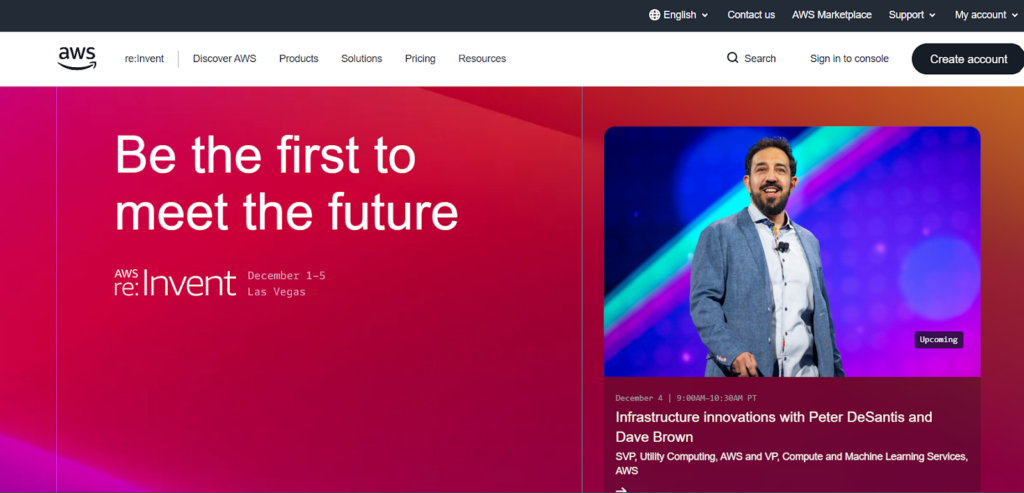
For flexibility and risk reduction, businesses are increasingly using multi-cloud solutions. Businesses split workloads between AWS rather than depending on a single supplier. This helps companies select the optimal solution for every use case and avoids vendor lock in. Thus, improved orchestration technologies and uniform dashboards will make managing multi cloud strategies easier in the future.
4. Vertical Clouds
Vertical clouds or industry specific clouds are gaining traction. These clouds come preloaded with regulatory compliance and AI models built for a particular industry. For instance, financial clouds include fraud detection modules. Also, retail clouds offer personalization engines. Manufacturing clouds integrate seamlessly with IoT and digital twins. As industries demand more customized solutions, vertical clouds will evolve into turnkey ecosystems.
5. Serverless Computing
The way developers create applications is evolving due to serverless computing. Teams deploy code and let the cloud take care of the rest, rather than managing infrastructure or creating servers. It is economical and event driven. Serverless databases and serverless machine learning pipelines will enable serverless architecture to grow beyond basic tasks into large scale applications. Faster development cycles are thus made possible by this change, which also lowers operational costs.
6. Integration of Quantum Computing
Even though quantum computing is still in its infancy, cloud providers are offering it as a service. Without the need for specific hardware, these tools enable developers to experiment with quantum algorithms. Future cloud ecosystems that integrate quantum processing with traditional computing will enable innovations in cryptography and optimization. Businesses will have access to previously unheard of processing capacity through straightforward cloud connections as quantum technology picks up speed.
7. Growth of Cloud Sustainability
These days, companies prioritize sustainability, and cloud providers are crucial in lowering carbon emissions. The use of renewable energy and comprehensive sustainability dashboards that assist businesses in assessing their environmental impact will be the main features of the upcoming generation of cloud services. Cloud providers that promote green operations will become more and more popular with organizations.
8. Cloud Native Applications
Cloud native applications are built around microservices and APIs. They have now become the blueprint for modern software development. These applications are highly modular and resiliant. As businesses embrace digital transformation, cloud native methodologies will dominate development pipelines. Kubernetes will evolve with more automation and greater developer experience improvements. So, organizations that adopt cloud native architectures will innovate faster and maintain more reliable applications.
9. Zero Trust Architectures
The rise of multi cloud environments and distributed applications has forced security models to evolve. Even if a person or device is inside the network perimeter, zero trust architecture presumes that they are not trustworthy by default. Rather, robust identity management and ongoing verification. Cloud systems will include zero trust architectures immediately. Additionally, cloud environments will become more secure by default thanks to automated threat detection and AI powered anomaly analysis.
10. Hybrid Cloud Models
The finest features of both public cloud scalability and on-premises control are combined in hybrid cloud solutions. Many companies rely on hybrid setups to satisfy regulatory requirements or sustain outdated programs that cannot be fully moved. Future hybrid platforms will provide uniform security levels across environments and smooth task mobility.
11. Cloud Automation

Cloud automation will eliminate manual work across deployment and optimization. Infrastructure as Code tools, such as Terraform, already simplify provisioning. But future automation will be more autonomous. Self healing infrastructure will detect failures and automatically fix issues. Workflows will auto adjust based on usage patterns. Security patches will deploy instantly. This level of automation will allow companies to operate with minimal human overhead.
12. Distributed Cloud Infrastructure
By dispersing resources over several sites, closer to users and endpoints, a distributed cloud architecture increases the capabilities of traditional cloud computing. This guarantees reduced latency and steady performance. Future distributed cloud models will merge public cloud and private data centers into one unified environment. Organizations with global operations will benefit significantly as applications become more responsive and reliable across borders.
13. Cloud Based AI Agents
AI agents are becoming an integral part of cloud ecosystems. These agents can support customer service or act as intelligent co pilots for developers and employees. The processing power required to operate these agents at scale is provided by the cloud. AI agents will eventually develop into self sufficient systems that recognize patterns and offer suggestions.
14. Cloud Cost Optimization
With the increasing complexity of cloud services, cost optimization becomes essential. Businesses are increasingly adopting FinOps practices. AI powered tools will analyze usage and automatically reduce waste by shutting down unused resources or rightsizing infrastructure. In the future, cost optimization will be mostly automated. Cloud providers will offer deeper visibility and smarter recommendations.
15. Cloud Becomes the Foundation for the AI Native Future
The next generation of applications will be AI native. These applications will integrate into every layer, from UX and logic to operations and decision making. The cloud will be the engine powering this shift. From training large language models to supporting real time inference and the distributed architecture required to build AI first systems. Cloud platforms will develop in AI infrastructure centers as AI becomes essential to all businesses.
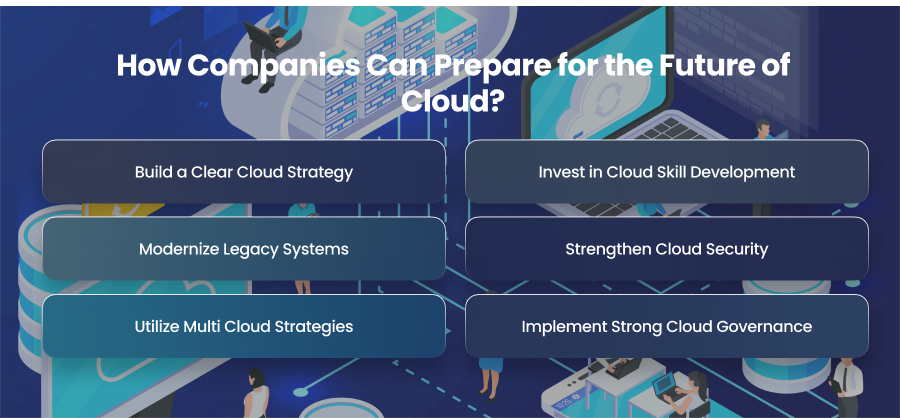
How Companies Can Prepare for the Future of Cloud?
Build a Clear Cloud Strategy
Inconsistent performance results from many businesses moving to the cloud without a plan. Businesses need to have a cloud strategy that directly relates to their goals, like increasing productivity, in order to be ready for the future. Teams may embrace the appropriate services and make sure the cloud supports the long term goal rather than turning into an unforeseen expenditure with the aid of a well defined roadmap.
Invest in Cloud Skill Development
Users have a major role in the cloud’s success. Employers must provide their staff with the resources they need to manage increasingly complicated cloud systems. Upskilling in areas like cloud security will be essential. Partnerships with cloud suppliers or certification paths can accomplish this.
Modernize Legacy Systems
Legacy applications can slow innovation and limit the ability to adopt advanced cloud capabilities. As a result, companies need to progressively update their antiquated systems. More agility and quicker development cycles are offered by cloud native designs like serverless models and microservices. Modernization eventually turns into a strategic enabler that boosts productivity.
Strengthen Cloud Security
The future of cloud comes with increased risks as environments become more distributed and interconnected. To stay secure, companies must implement strong identity controls and zero trust architectures. Instead of believing internal networks are safe by default, zero trust requires each person and device to be authenticated. If companies improve their security posture today, they will be better prepared to deal with emerging threats.
Utilize Multi Cloud Strategies
A single cloud provider might reduce flexibility and lead to long-term reliance. Designing architectures that can operate across different providers or integrate public cloud with on premises systems is part of preparing for the future. Businesses may select the optimum services for each task and increase resilience with multi cloud and hybrid methods. Businesses that embrace flexibility today will find it simpler to adapt when new platforms arise, thanks to the growth of distributed architectures.
Implement Strong Cloud Governance
As cloud adoption grows, so does the complexity of managing costs and data. Cloud governance provides guardrails while enabling innovation. FinOps frameworks help organizations understand spending and manage resource responsibly. With AI driven cost tools and real time usage visiblity, businesses can avoid overspending and maintain efficiency.
Final Words
AI powered automation and more intelligent infrastructures are anticipated in the future of cloud computing. Early modernization, cloud native architecture adoption, and investment in AI driven capabilities will provide organizations a distinct competitive edge.