


According to statistics, Salesforce Agentforce handled over 380,000 customer support interactions. Moreover, they resolved 84% cases on their own, requiring human help in 2% of them. Also, Businesses using Microsoft’s AI agents in their operations report operating up to 33% faster.
These Agentic AI systems represent the next major shift in how organizations deliver digital experiences and automate work. Two of the biggest players in this emerging space are Salesforce Agentforce and Microsoft’s Agentic OS. While both aim to help businesses build intelligent and automated processes using AI agents, each approaches the challenge from a different angle.
In this guide, we will discuss what each platform offers and how they differ. We will also discuss how to decide which one fits best into your architecture.
Salesforce Agentforce
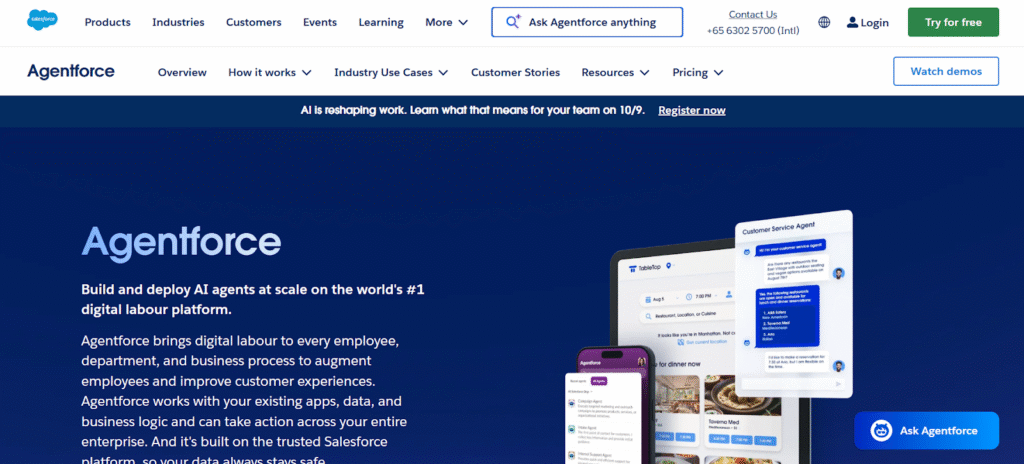
Salesforce Agentforce represents Salesforce’s leap into the era of autonomous enterprise systems. Moreover, it’s designed to help organizations build AI agents that can understand context and automate complex business tasks.
What sets Agentforce apart is that it’s not just another AI toolkit; it’s a tightly integrated and CRM native agentic platform built specifically for how businesses actually operate. For organizations that already lean heavily on Salesforce for sales and marketing, Agentforce provides a direct path to building intelligent automations without re architecting the entire stack.
Salesforce has always positioned itself as a business operations platform first and a technology platform second. Agentforce continues this philosophy by embedding AI deeply into real business workflows, not just offering AI as an add on.
Rather than giving teams a blank canvas and asking them to engineer everything from scratch, Agentforce comes with:
- Predefined business templates
- Industry specific logic
- Embedded CRM data models
- Pre built automation flows
- Guardrails that reflect common business processes
This means organizations can deploy useful AI agents faster and with much less risk.
Components of Agentforce
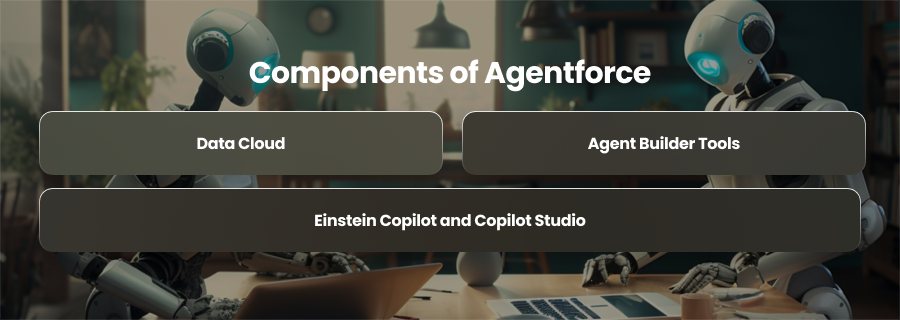
Einstein Copilot and Copilot Studio
Einstein Copilot is the conversational AI interface built directly into Salesforce’s core products. With Agentforce, Copilot becomes far more than a chatbot; it becomes the central nervous system for business automation.
Copilot Studio offers tools to customize and extend Copilot by creating:
- Custom skills that teach AI how to complete specific tasks.
- Prompt templates that define behaviors and reasoning patterns.
- UI integrations to embed agents inside Salesforce pages.
- Action frameworks that allow agents to trigger system events or orchestrate workflows.
These features allow organizations to craft highly tailored and domain specific agents that understand their operations deeply.
Data Cloud
Salesforce Data Cloud acts as the unified data layer feeding Agentforce. It connects siloed customer data from hundreds of sources. This includes CRM and even external apps.
This unified data gives Agentforce a unique advantage:
- Agents operate on clean and harmonized profiles.
- Data is always contextual and up to date.
- Customer history and interactions can be factored into decisions.
- Cross channel insights help agents generate accurate outputs.
Without unified data, agents tend to make assumptions or rely on incomplete information. Data Cloud solves that problem.
Agent Builder Tools
Agentforce comes with a full suite of tools to create and manage autonomous agents. These tools allow teams to define:
- Goals
- Decision making rules
- Orchestration logic
- Multi step workflows with branching paths
- How agents interact with external systems
These agents can take autonomous actions. This includes escalating a case or assigning tasks to human teams.
Microsoft’s Agentic OS
Microsoft’s Agentic OS is Microsoft’s vision for an enterprise ecosystem powered by autonomous AI agents. Unlike traditional copilots that simply assist with tasks, Agentic OS provides the foundation for AI native workflows.
Where Salesforce Agentforce focuses on customer facing business processes, Microsoft’s Agentic OS aims to bring agentic automation to the entire organization, from IT operations to document workflows.
Microsoft isn’t approaching AI from a CRM or app centric angle. Instead, it’s focusing on:
- Cloud infrastructure (Azure)
- AI orchestration frameworks
- Data services and pipelines
- Productivity platforms (Microsoft 365)
- Developer ecosystems
- Security and compliance systems
- Edge devices and endpoints
Components of Microsoft’s Agentic OS
Azure AI Studio
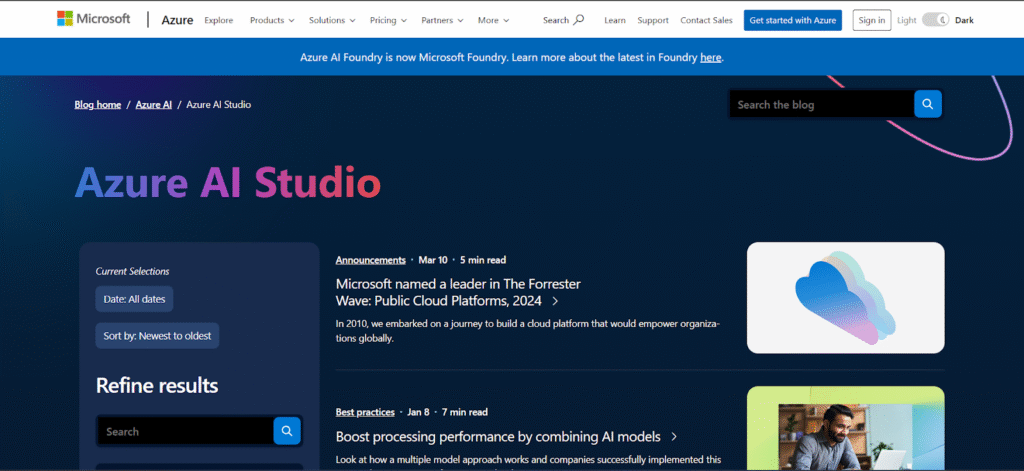
The command center for building and deploying advanced AI agents. It gives organizations everything they need to create custom agentic systems:
- Model integration (OpenAI models, Azure-hosted models)
- Skill and tool management
- Prompt authoring
- Multi agent orchestration
- Evaluation and testing
- Safety and governance controls
It’s designed to help teams move from a simple copilot to a full multi agent ecosystem without needing to reinvent the wheel.
Copilot Studio
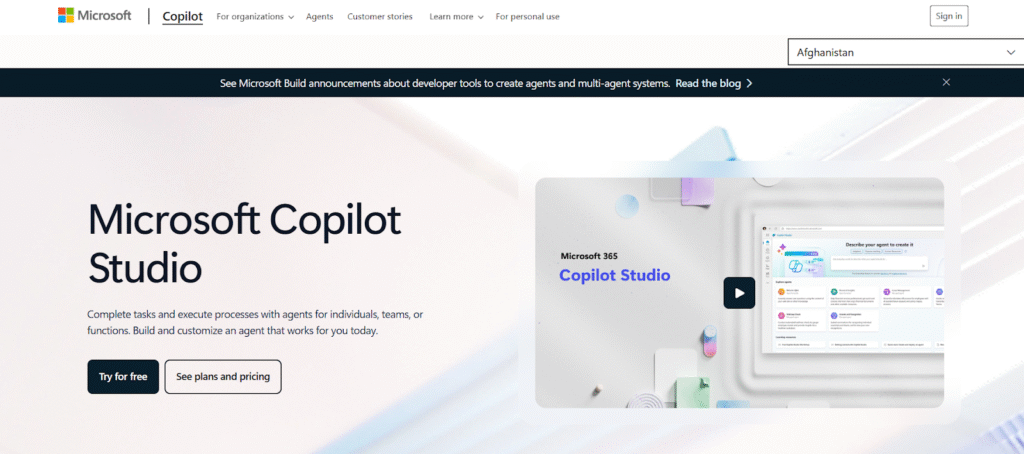
Copilot Studio extends Microsoft’s Copilot ecosystem by allowing organizations to:
- Customize Microsoft 365 Copilot
- Build standalone copilots
- Integrate agents into Teams
- Assign capabilities or skills to each copilot
Semantic Kernal
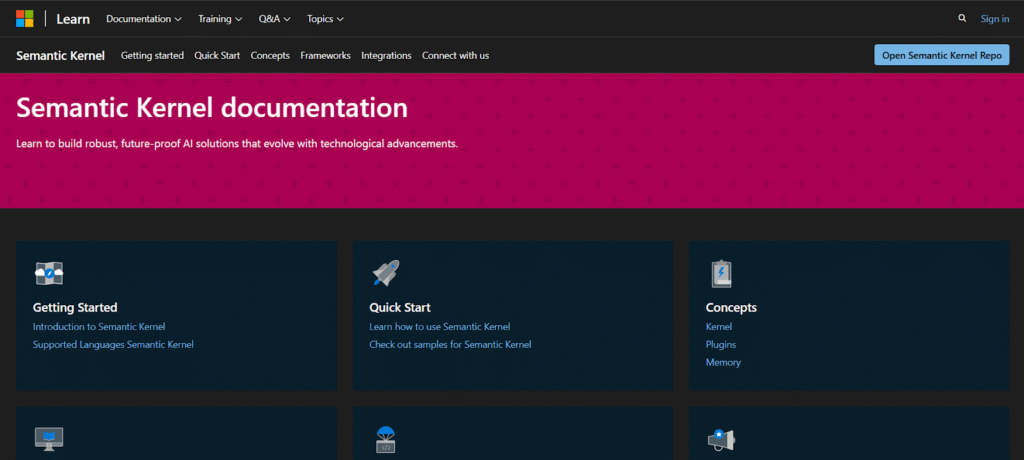
The Semantic Kernel is one of the most important components of Microsoft’s agentic vision. It’s open source orchestration framework designed specifically for building complex and intelligent AI agents.
With Semantic Kernel, developers can:
- Define agent “skills”
- Manage agent “memories”
- Connect agents to APIs and databases
- Coordinate multi step reasoning
- Implement multi agent collaboration
- Create autonomous workflows with stateful logic
Deep Integration Across Microsoft 365
Agentic OS agents can work natively inside all the productivity tools that employees depend on:
- Outlook
- Teams
- Word
- Excel
- SharePoint
- Power Platform
Differences Between Agentforce vs Agentic OS
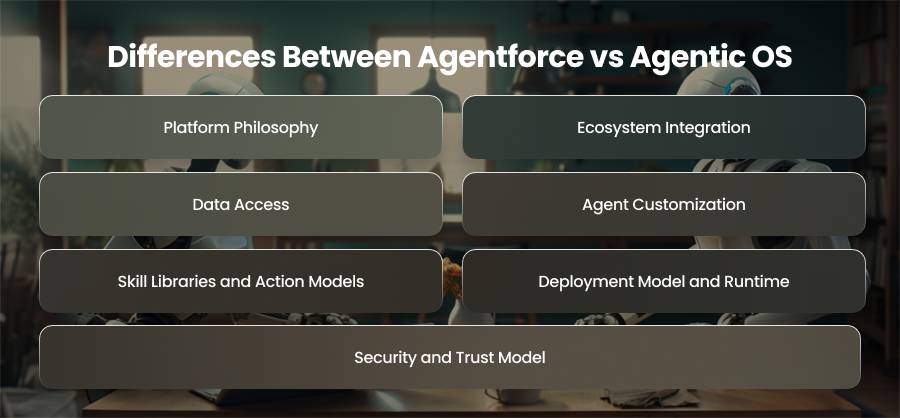
Platform Philosophy
Agentforce was created to bring trusted AI agents into the Salesforce ecosystem. Its mission is straightforward: make CRM and sales operations smarter by embedding AI deeply into Salesforce’s cloud applications.
In contrast, Microsoft’s Agentic OS is a general purpose agent operating layer meant to sit across any environment. Moreover, Microsoft is not optimizing for a single domain. Instead, it wants to create a unified agent framework that works horizontally across the modern enterprise tech stack.
Ecosystem Integration
Salesforce Agentforce is a vertically integrated solution. Everything revolves around the Salesforce ecosystem, its data model, and its cloud services. It’s perfect if your core operations already depend on Sales Cloud or Tableau.
Agentic OS is a horizontal integration layer. It’s built to reach into any tool your team uses, from ERP systems to collaboration platforms. Microsoft is aiming for OS level integration, where agents can talk to local files and cloud services.
Data Access
Agentforce utilizes the Salesforce Data Cloud as its data foundation. Governance here is strict and structured to CRM data models. Moreover, it works exceptionally well if your operational data lives inside Salesforce or integrates tightly with it.
Agentic OS takes a more flexible and complex approach. It taps into Microsoft Graph, Azure data, and a wide range of third party connectors. It’s ideal for companies with large volumes of unstructured data or distributed data estates.
Agent Customization
Agentforce focuses on customizing agents through low code, no code tooling and flow builders. While developers can extend it via Apex or custom integrations, the emphasis is on empowering business teams to build and use AI.
Agentic OS provides more developer first extensibility. Engineers can build custom skills and executable agent instructions using Microsoft’s SDKs and Azure Services. It’s more flexible but requires stronger engineering involvement.
Skill Libraries and Action Models
Agentforce uses Salesforce’s proprietary Action Framework, which defines what agents can do inside Salesforce applications, create a lead, or trigger a flow.
Agentic OS uses skills that can be built using Python or Azure Functions. Skills can interact with virtually any system that exposes an API.
Deployment Model and Runtime
Agentforce lives entirely inside Salesforce’s cloud, with agents running within a controlled trust and governance layer.
Agentic OS agents can:
- Run in Azure
- Run inside Microsoft 365
- Run on Windows Devices
- Run natively within business apps
- Operate across hybrid cloud environments
This gives Agentic OS a distinct advantage for organizations with large device fleets or hybrid infrastructure.
Security and Trust Model
Salesforce emphasizes trusted AI with reliabel guardrails and transparent AI governance layers, specifically for CRM and customer data.
Microsoft takes a broader enterprise security stance using:
- Microsoft Entra ID
- Purview
- Graph permissions
- Device trust
- Azure governance
How Do They Work Together?
Complementary Strengths
The first step to successful integration is understanding the complementary strengths of each platform. Salesforce Agentforce excels at automating customer interactions and sales workflows. Its agents are deeply embedded in Salesforce data and workflows.
Microsoft’s Agentic OS is designed for enterprise wide automation across Microsoft 365 apps, Azure cloud services, and multi agent orchestration. By combining these strengths, organizations gain both customer facing intelligence and system level operational automation.
Integration Touchpoints Between the Two Platforms
There are multiple practical ways that Salesforce Agentforce and Microsoft Agentic OS can interact. One key touchpoint is data synchronization: Salesforce agents operate on Data Cloud, while Microsoft agents utilize Azure data services or Microsoft Graph. Additionally, agents may obtain unified customer and operational data by integrating these platforms. This guarantees that judgments are founded on accurate and comprehensive information.
Another touchpoint is workflow orchestration. For instance, a high priority customer case in Salesforce can trigger internal IT checks with the results fed back into Salesforce automatically. AI collaboration also allows Microsoft agents to summarize CRM data and generate insights, which Salesforce agents can utilize to make customer facing decisions faster.
Multi Agent Workflows Across Platforms
Enterprises can design multi agent systems where each platform specializes in different types of tasks. Salesforce Agentforce agents handle CRM focused responsibilities like lead qualification and case resolution. Microsoft Agentic OS agents handle operational tasks such as IT provisioning and cross department workflow orchestration. When these agents communicate and trigger actions across platforms, the organization gains a coordinated and intelligent automation layer that reduces manual handoffs and minimizes errors.
How to Decide What’s Best for Your Stack?
Assess Your Core Technology Stack
The first step is to evaluate where the majority of your business processes reside. If your company is heavily invested in Salesforce then Agentforce is likely the most efficient choice. Its agents are optimized to operate directly within Salesforce, utilizing the Data Cloud and pre built workflows. On the other hand, if the infrastructure of your company is based on Microsoft products like Dynamics 365 and Azure. Additionally, Agentic OS can offer greater adaptability, allowing agents to function in many applications.
Identify Your Primary Use Cases
You should determine the specific problems you want AI agents to solve. Agentforce excels at customer facing tasks, such as lead management and commerce workflows. If your goal is to automate interactions directly with customers or improve sales and service efficiency, Salesforce is the natural choice. Microsoft’s Agentic OS is ideal for enterprise automation.
Evaluate Data Management
Data availability and accesibility are critical when deciding between platforms. Salesforce Agentforce operates on the Data Cloud, ensuring that CRM workflows have clean and harmonized customer data. If most of your relevant data already lives inside Salesforce, Agentforce will provide faster insights with less integration effort.
Microsoft’s Agentic OS can pull from a wide variety of sources, including Azure data services and external APIs. This makes it better suited for organizations with diverse or distributed datasets.
Consider Resource Capabilities
Salesforce Agentforce is designed for quick deployment, with low code tools that empower business teams to build agents without heavy engineering involvement. Microsoft’s Agentic OS offers greater flexibility and multi agent orchestration but requires skilled engineering resources to configure and manage agents effectively. If your organization has a strong development team capable of building complex integrations and workflows, Agentic OS can offer more long term value.
Assess Security and Compliance
Although they do it in different ways, both systems offer enterprise security. Agentforce specializes in CRM, customer data governance, and Salesforce specific permission hierarchies. Agentic OS provides a broader enterprise governance model and multi agent safety policies.
Final Words
Salesforce Agentforce and Microsoft’s Agentic OS each offer powerful agentic capabilities. Therefore, your stack and processes will determine which fit is best for you. Smoother automation is ensured by matching AI agents with your operational objectives, regardless of the technique you choose.