



According to statistics, 85% of enterprises will use AI agents. Furthermore, the market for AI agents will reach $150 billion. This is because AI agents have become vital to organizations in automating operations and generating smarter apps. AI agents are becoming an essential part of contemporary workflows. This includes a coding assistant that creates and tests software or a customer support bot that troubleshoots problems on its own.
Selecting the optimal AI agent stack, however, could be tricky. With so many platforms and frameworks available, it’s challenging to evaluate which one suits your goals. Some solutions are built for business users and others for teams needing powerful infrastructure.
In this guide, we will discuss the best AI agent platforms and specialized tools that help agents work safely and efficiently.
What Features to Look for in an AI Agent Tool?
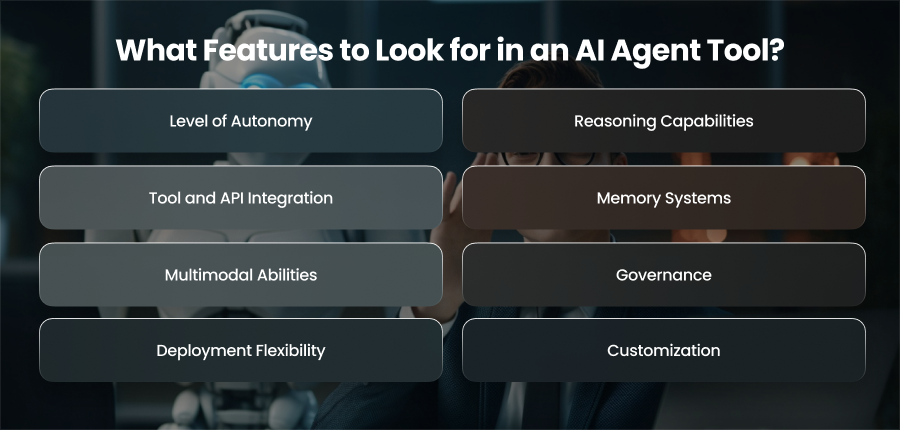
Level of Autonomy
AI agents can range from reactive assistants who just answer to user inquiries to completely autonomous agents capable of planning and executing multi step tasks without human involvement. For simple workflows or customer support tasks, semi autonomous agents might suffice. However, for complicated automation or development workflows, you will require agents that can act independently. Additionally, increased efficiency is made possible by high autonomy, but it also needs dependable safety measures to stop inadvertent activities.
Reasoning Capabilities
A successful AI agent should do more than deliver fast replies; it should be capable of reasoning and planning. This includes breaking down complicated activities into simple pieces and reflecting on outcomes to refine future decisions. Advanced agents often use chain of thought reasoning and recursive planning loops. These capabilities are especially important for agents in software development.
Tool and API Integration
A defining characteristic of modern AI agents is their ability to interact with external systems. Agents that can integrate with APIs and SaaS platforms provide tremendous value. For instance, a sales agent might pull CRM data and trigger marketing campaigns autonomously. Similarly, a developer focused agent could write code and deploy applications automatically. When evaluating agent tools, check whether they support the APIs or software ecosystems your organization relies on.
Memory Systems
Memory is what allows an AI agent to maintain context and continuity over time. Agents with strong memory systems can remember past interactions and learn user preferences for more accurate responses. Memory can be short term or long term, stored in vector databases like Pinecone. Moreover, RAG pipelines enhance memory by allowing agents to access knowledge bases dynamically.
Multimodal Abilities
AI agents increasingly need multimodal capabilities, allowing them to process and create many types of data. This includes graphics, video, or even code. For example, a customer support agent may need to analyze a screenshot or trigger an API action, all within a single workflow. Agents with multimodal capabilities are far more versatile and can address complex problems that span multiple data types.
Governance
As AI agents become more autonomous, safety and governance are paramount. Modern agent platforms provide features like role based access controls and guardrails for restricted actions. Observability allows teams to track an agent’s decisions and resource use, enabling debugging and cost control. Adherence to external rules and internal policies is vital for firms.
Deployment Flexibility
The environment where your AI agent operates significantly impacts its effectiveness. Some agents are cloud based and fully managed, ideal for quick deployment and scalability. Others require on premis or hybrid deployments, necessary for sensitive data or strict compliance needs. Serverless options allow agents to execute tasks without provisioning infrastructure, while edge deployment enables real time performance in resource constrained environments.
Customization
Every organization has unique workflows and requirements. The ability to customize agent behavior or extend functionality through plugins or modules is vital. Some platforms provide low code customization options, while developer frameworks offer full programmatic control. Extensibility guarantees that your agent may expand alongside your business or incorporate future AI models without requiring a total rebuild.
Best 12 AI Agent Platforms
- OpenAI

OpenAI GPTs are among the most versatile and and widely used platforms for building AI agents. Utilizing GPT models, these agents can understand natural language and execute multi step actions. It also calls APIs. The GPT Store enables users to access pre built agent templates or share custom agents. This significantly reduces development time. Moreover, GPTs also handle multimodal inputs, allowing agents to process text and structured data. This makes them very flexible across numerous sectors.
The platform’s fundamental strength rests in its simplicity and accessibility. Even people with minimum coding skills can build up and deploy agents for a range of functions. However, reliance on cloud infrastructure means on premise deployments are limited and frequent API usage can increase costs.
- Microsoft Copilot
Microsoft Copilot integrates AI agents into the Microsoft ecosystem. It enables businesses to coordinate intricate operations and automate tedious tasks without requiring a lot of code. Because it offers deep integration and a smooth user experience across well known technologies, the platform is especially attractive to businesses that depend on Microsoft software.
Copilot Studio focuses on security and delivers corporate grade safeguards and audit tools.
Users can build agents using a drag and drop interface, making it accessible for non technical team memebers. While it offers business oriented capabilities, it’s less flexible for cross platform integrations or custom AI workflows compared to developer focused frameworks. The platform is well suited for automating office workflows and enhancing team productivity within Microsoft environments.
- Google Vertex AI Agent Builder
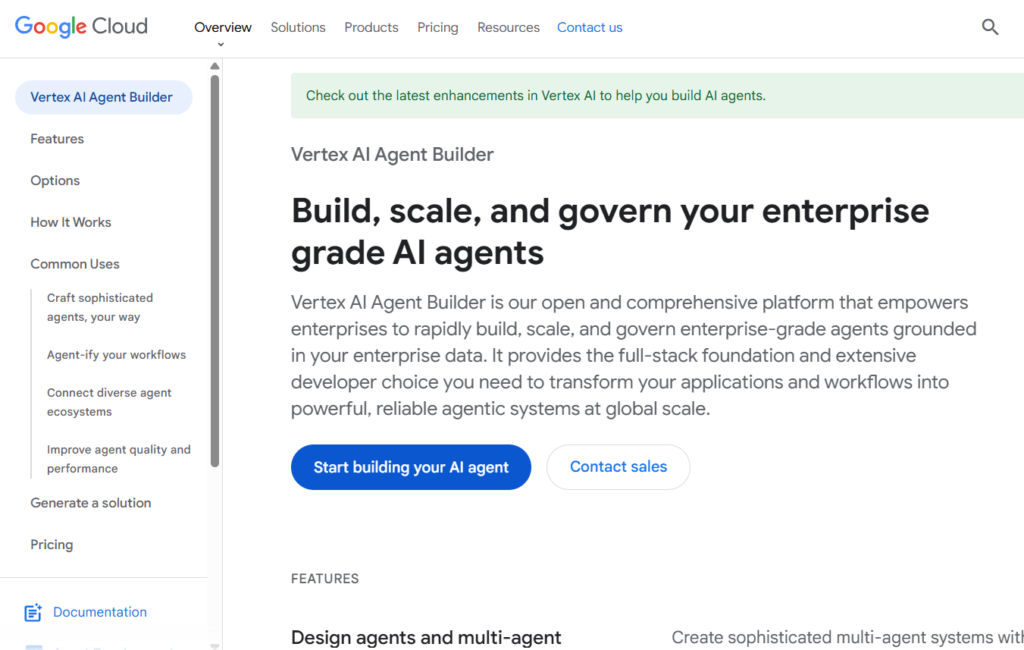
Google Vertex AI Agent Builder is designed for enterprise grade AI agent development and deployment. Built on Google’s Gemini models, it supports the creation of highly scalable agents capable of integrating with enterprise data pipelines and multimodal datasets. Vertex AI’s strength lies in its RAG pipelines, which allow agents to access and reason over both structured and unstructured information and knowledge intensive workflows.
The platform offers enterprise level security and ensures agents can perform reliably at scale. Its integration with Google Cloud services simplifies deployment and operational management for large organizations. Vertex AI is particularly effective for enterprises that require reliable performance and agents capable of complex data driven decision making.
- Zapier AI Actions
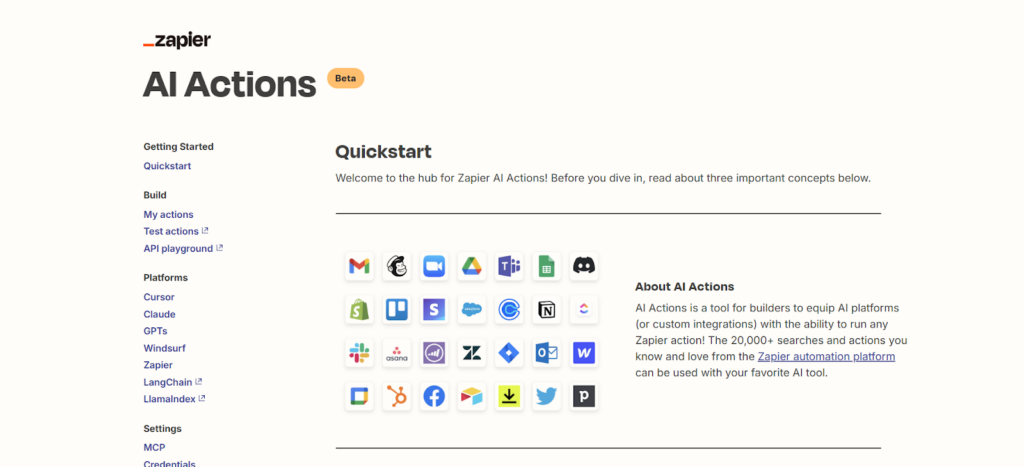
Zapier AI Actions focuses on workflow automation. This enables AI agents to interact with thousands of SaaS applications. Users can create agents that trigger automated workflows and update CRM systems. The platform’s primary advantage is its simplicity. Non technical users can quickly build functional AI agents without programming skills.
Zapier AI Actions is excellent for small organizations and teams who rely on many cloud services and wish to automate everyday activities effectively. While it thrives at linking multiple programs and completing basic workflows, it’s less suitable for jobs requiring deep thinking or autonomous decision making.
- LangChain

LangChain remains one of the most recognized frameworks for building AI agents and LLM applications. It provides a modular architecture build around chains and agents, making it easier for developers to orchestrate large language model reasoning and multi step tasks. LangChain also supports memory components and integration with vector databases. This allows developers to build context aware applications.
One of LangChain’s standout features is its vast ecosystem of community created modules. This makes it easy to integrate with popular models such as OpenAI.
- LlamaIndex

LlamaIndex is a powerful framework designed to help developers build RAG and agent powered applications. It specializes structured knowledge integration. This lets developers connect LLMs to private data through indexes and document stores. With its agent features, LlamaIndex facilitates the building of autonomous agents that query different data sources and make choices depending on user input. It features a clear and intuitive API that appeals to developers that seek simplicity without losing capabilities. LlamaIndex works especially effectively in business contexts where data privacy and reliability are significant issues.
- Microsoft Semantic Kernel

Semantic Kernel is Microsoft’s open source framework that blends traditional AI orchestration with the power of plugins. Built for Python, it provides a structured way to combine LLMs with deterministic functions and APIs. The framework is particularly appealing because it aligns seamlessly with Azure OpenAI services. This makes it ideal for enterprises already operating within the Microsoft ecosystem. Semantic Kernel’s planner system allows agents ti automatically break down tasks into actionable steps. This improves autonomy and productivity.
- CrewAI
CrewAI focuses specifically on multi agent coordination. Instead of building a single agent, developers can create entire crews of agents, each with its own role and task profile. This makes CrewAI highly effective for automating workflows such as research and business operations. The framework also includes memory features and a growing ecosystem of plugins and AI tools. Crews can run sequentially or concurrently, allowing developers to create parallelized AI agent systems that significantly reduce execution time. Moreover, CrewAI’s developer friendly syntax and extensibility make it a popular choice for teams exploring multi agent automation at scale.
- Flowise
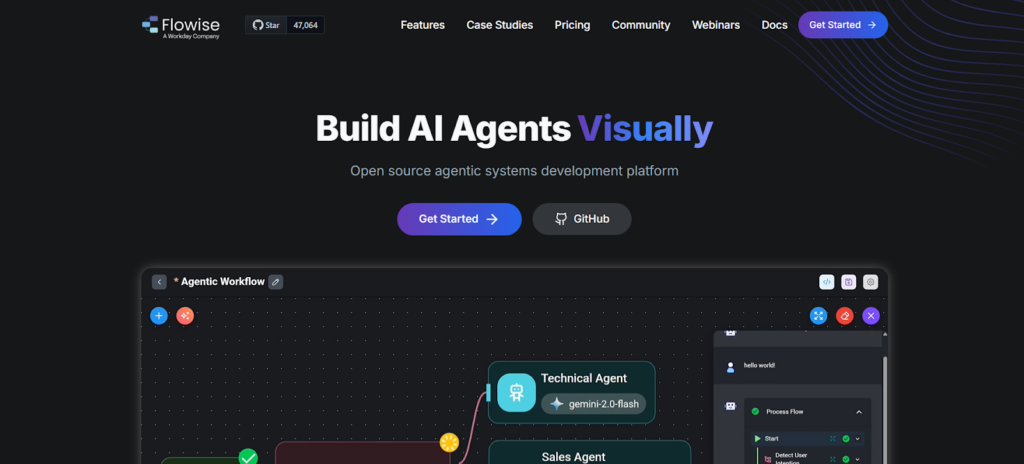
Flowise provides a visual drag and drop interface for creating AI agents, making it ideal for teams that want to build agentic workflows without writing much code. It integrates with LangChain and multiple LLM providers, giving users flexibility without complexity. Flowise is widely used for prototyping and lightweight automation projects.
- Aider
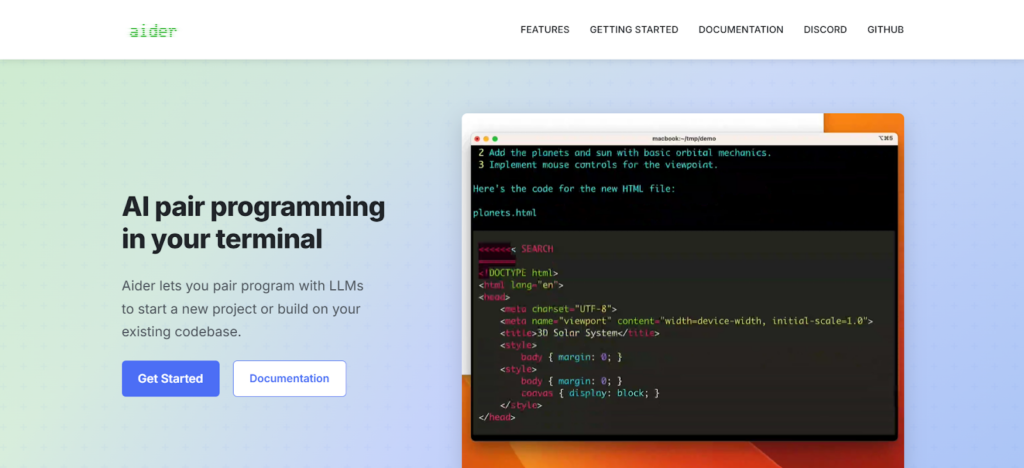
Aider is a command line coding agent that uses LLMs to modify and improve real codebases. It integrates directly with version control systems like Git. This enables agents to propose changes and improve code quality. Developers simply chat with their repo, and Aider applies changes safely and transparently. It’s one of the most effective tools for real world software engineering automation. This makes it perfect for developers who want an AI pair programmer that works inside existing workflows. Aider’s simplicity and community support have made it a favorite for engineering teams adopting AI agents.
- Replit Agents

Replit Agents are designed specifically for software engineering automation. These agents help developers write and deploy code across various programming languages. Replit provides an environment where agents can interact with the entire development lifecycle. This makes Replit Agents extremely useful for teams building coding assistants or automating repetitive engineering tasks. With Replit’s collaborative cloud IDE, these agents can also work alongside humans, accelerating development and reducing overhead.
- Anthropic Claude Tool

Anthropic’s Claude models include excellent structured tool use capabilities that make them ideal for agent workflows. Claude is known for its safety and thoughtful reasoning, making it effective for sensitive use cases like legal AI and enterprise RAG systems. Its Workflows feature allows developers to orchestrate structured agent pipelines directly within Anthropic’s ecosystem. This reduces the amount of infrastructure required. Claude’s strengths in deep thinking and long context reasoning also make it ideal for research assistants and complex task breakdowns.
Final Words
AI agents are quickly transforming how businesses build and automate intelligent workflows. With powerful platforms and specialized tools, teams can create agents that think and act. Therefore, choosing the right combination provides efficiency and long term competitive advantage in an increasingly AI driven world.