



The worldwide software industry is anticipated to grow to around $2248.33 billion over the next nine years, according to itransition. This is due to the fact that as user demands get more complex, software solutions become more sophisticated.
Choosing the best development approach is one of the first and most important choices when creating a new digital product. The functioning of your product is impacted by this decision.
Many businesses struggle with this decision because each option sounds equally important. The differences lie in what your product needs right now and how it will evolve in the future. A data-heavy SaaS platform has very different requirements than a visually rich eCommerce website or an early-stage startup MVP.
In this guide, we’ll break down backend, frontend, and full-stack development. We will also help you understand which approach is best for your specific product type.
Backend Development
Backend development forms the technical backbone of any digital product. Every action users take depends on backend logic operating well, even if they never directly interface with backend systems. The backend makes sure that everything runs properly in the background, from processing payments and providing real time updates to logging in and storing data.
Role of Backend Development in Modern Applications
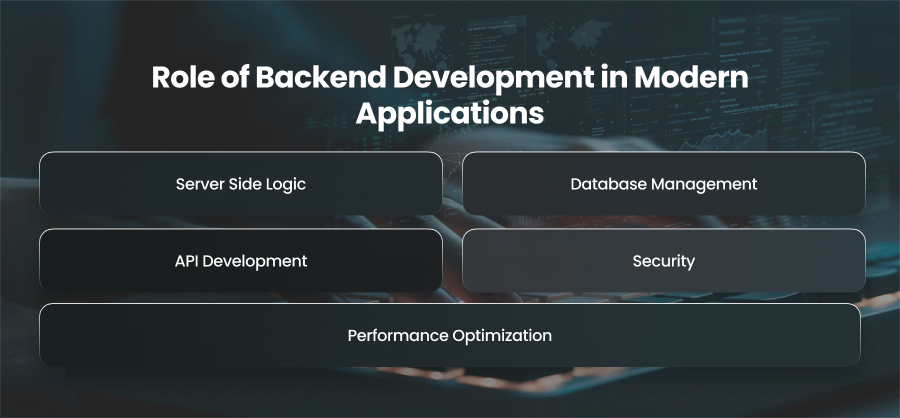
Server Side Logic
Implementing an application’s basic business logic is the responsibility of backend developers. This includes processes like data validation and user registration. Regardless of how consumers engage with the product, backend developers make sure that rules are implemented uniformly throughout the system. Therefore, by centralizing business logic on the server side, applications are kept secure and simple to maintain over time.
Database Management
Data management is one of the most important facets of backend development. To guarantee quick and dependable data access, backend engineers create database structures and optimize queries. Whether the application uses relational databases, MySQL solutions, or NoSQL databases like MongoDB. Moreover, proper data handling directly affects performance. Efficient backend systems minimize redundancy and prevent data corruption.
API Development
Backend developers provide APIs that facilitate communication between various application components. APIs serve as intermediaries between various services. A well designed API guarantees seamless data transmission and facilitates the integration of other tools like CRM systems and payment gateways. Products can increase their usefulness without requiring significant design modifications because of this adaptability.
Security
Security is a core responsibility of backend development. Backend systems manage sensitive data, such as user passwords and private information. In order to restrict unauthorized access to this data, backend developers also employ authentication methods and encryption mechanisms. Additionally, they protect apps from frequent dangers like data leakage.
Performance Optimization
Backend systems must scale with user traffic without faltering or slowing down. Backend engineers concentrate on using caching and effective database queries to maximize server speed. They create structures that can manage increasing data volumes and traffic spikes. Applications will continue to be dependable and responsive as the company grows, thanks to scalable backend development.
Frontend Development
The part of your program that users directly interact with is called frontend development. It includes everything that a user sees and engages with, including interactive features like animations, as well as the design. While backend development powers the functionality, frontend development ensures that functionality is accessible and engaging.
Role of Frontend Development in User Experience
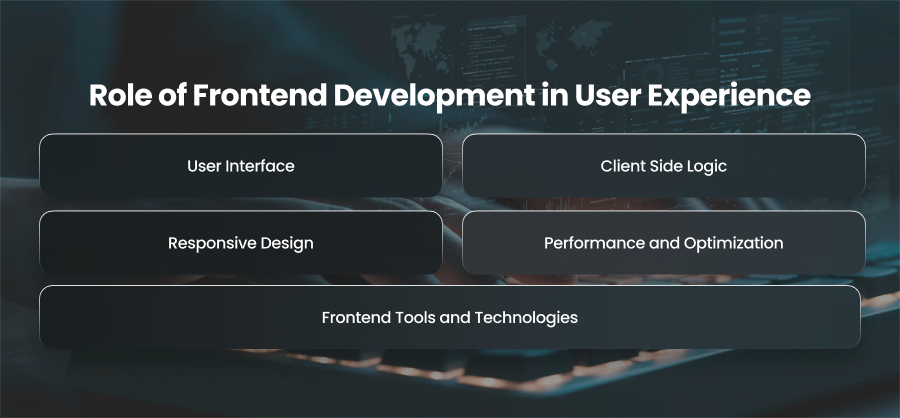
User Interface
One of the most crucial aspects of frontend development is user interface design. To create user friendly layouts, frontend developers work closely with designers. They improve the interface for accessibility requirements and guarantee uniformity across pages.
Client Side Logic
Beyond design, frontend development handles client side logic, which powers dynamic behaviors in the browser. This includes features such as interactive forms and data validation. Frontend developers create responsive apps using frameworks like React and JavaScript.
Responsive Design
Frontend developers are in charge of making sure apps work perfectly across a range of devices. A product may automatically adjust to all devices thanks to responsive design approaches. Regardless of how people access it, this offers a uniform experience. This is particularly crucial for goods like eCommerce systems and content-rich websites where mobile usage predominates.
Performance and Optimization
Just as important as backend efficiency is frontend performance. Unresponsive elements or slow loading interfaces can irritate users and lower engagement. Frontend developers employ lazy loading for assets to optimize images. Next, they implement caching techniques to improve load times.
Frontend Tools and Technologies
Modern frontend development relies on a reliable set of tools and frameworks. Commonly used technologies include JavaScript. Moreover, frameworks include React and Angular. These tools allow developers to build interactive and scalable interfaces quickly while supporting modern features such as component based architecture and progressive web apps.
Full Stack Development
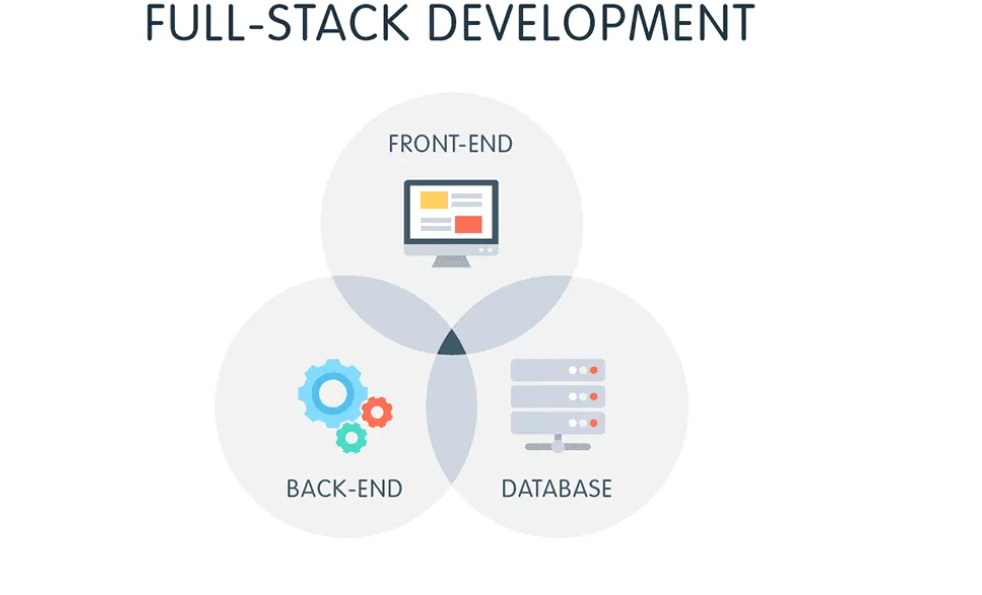
By integrating both skill sets into a single position, full stack development closes the gap between frontend and backend development. Full stack developers are familiar with every aspect of the application. This includes databases and user interfaces. Their adaptability makes them useful for initiatives that require rapid development.
Role of Full Stack Developers
Both frontend and backend work are handled by full stack developers. This enables them to independently develop end to end functionality. They are capable of designing databases and developing APIs. They may also simultaneously design user interfaces that are easy to use.
Working with comprehensive technological stacks that encompass both client side and server side development is sometimes referred to as full stack development. Popular stacks include:
- MERN Stack
- MEAN Stack
- Django + React or Flask + Vue for Python based projects
- Laravel + Vue for PHP based applications
These stacks provide integrated solutions. This enables front end interfaces and data management to be handled by full stack developers with a unified set of tools.
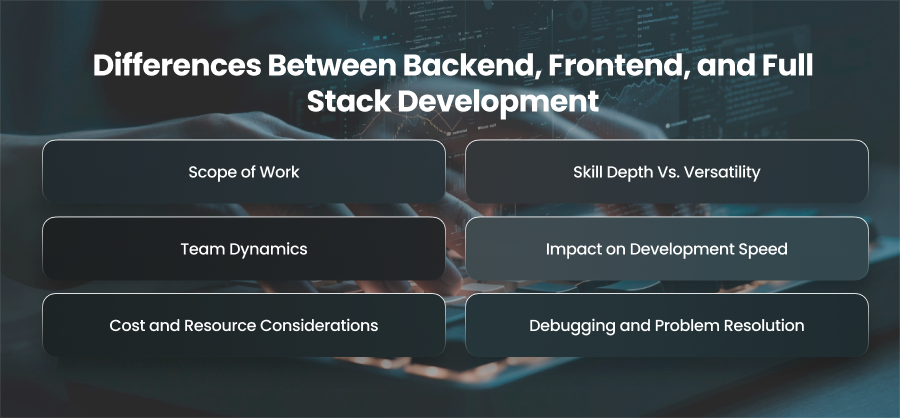
Differences Between Backend, Frontend, and Full Stack Development
Scope of Work
The most significant difference between the three lies in their scope of work. Backend developers specialize in server side operations and application logic. Their top objectives are data processing and security. Conversely, frontend developers concentrate on developing client side interactive features. Full stack developers, who manage the whole program lifecycle from server logic to the user interface, cover both areas. Although they provide variety and breadth, their depth in any field is usually less specialized than that of specialist frontend or backend engineers.
Skill Depth Vs. Versatility
Backend and frontend developers generally possess deep expertise in their respective domains. Backend specialists excel at database optimization and server architecture. Frontend developers, on the other hand, concentrate on frontend performance optimization and user interface design. Both frontend and backend activities may be handled by full stack developers. They are also perfect for teams who need flexibility or are in the early stages of product development.
Team Dynamics
How these jobs integrate into team structures is another important distinction. Frontend and backend developers occasionally collaborate in specialized teams, which can increase productivity but may also need more coordination and communication. Because full stack engineers don’t need regular cooperation, small teams are more adaptable. However, when significant knowledge is needed in complicated areas like database optimization, using just full stack engineers might lead to bottlenecks in bigger projects.
Impact on Development Speed
Full stack development generally allows for faster initial development. Because one developer or a small team can perform end-to-end activities without waiting for handoffs between backend and frontend teams, this is particularly crucial for MVPs. On the other hand, specialist teams frequently produce high quality solutions but may take longer in the beginning owing to dependencies.
Cost and Resource Considerations
Cost efficiency is another important differentiator. Full stack developers can be more cost effective for small teams or startups since fewer people are needed to cover the full development spectrum. Backend and frontend specialization can be more expensive but it’s justified in larger or highly scalable products where performance and security are critical.
Debugging and Problem Resolution
Because of their in depth knowledge, backend and frontend engineers in specialized teams concentrate on troubleshooting difficulties inside their respective fields, frequently finding solutions more quickly. Although full stack developers may track problems from beginning to finish by comprehending the complete flow, complicated problems may take longer to fix without specialized knowledge.
What is Best for Your Product Types?
MVPs
Flexibility and speed are typically the most important factors for startups and early stage products. When developing a minimal viable product, full stack development is frequently the ideal option since it enables a small team to swiftly provide full functionality. Rapid iteration based on user feedback is made possible by full stack engineers’ ability to control both frontend interfaces and backend code. This approach minimizes development costs and helps validate startup ideas.
SaaS Products
SaaS solutions usually need to strike a compromise between intuitive user interfaces. In order to manage user accounts and integrations, backend development is essential. On the other hand, frontend development guarantees engagement and usability. As the platform expands, many SaaS products begin with seasoned full stack engineers and progressively move to specialized frontend and backend positions.
Enterprise Applications
Enterprise applications demand high levels of performance. In these cases, seperating backend and frontend development is usually the most effective approach. Backend developers focus on complex business logic and data integrity. While frontend developers handle user interfaces and internal dashboards. Specialized teams help reduce risk and support long term enterprise requirements.
eCommerce Platforms
eCommerce platforms require both frontend and backend development. The backend must manage inventory and deal with third party services, even while the frontend is crucial for offering smooth shopping experiences and optimizing conversion rates. For most eCommerce projects, a combination of specialist frontend and backend engineers works effectively.
Content Based Platforms
Content platforms such as blogs and news websites prioritize frontend development to enahnce user engagement and accessibility. At the same time, backend systems handle content management and performance optimization. In these cases, frontend development often takes initial priority. This is supported by a scalable backend that can handle traffic growth and content updates efficiently.
Internal Tools and Business Applications
For internal tools and workflow applications, full stack development is often the most practical solution. These products typically have limited user bases and require fast development cycles rather than highly polished interfaces. Full stack developers can deliver functional and maintainable solutions quickly while keeping costs under control.
Scaling Products Over Time
As products change, development often needs change. In order to achieve speedier launches, many successful products start with full stack development. As use increases and features become more complicated, specialized backend and frontend roles are introduced. Selecting a development strategy that promotes scalability guarantees that your product may evolve without requiring significant architectural adjustments.
Final Words
The aim and growth goals of your product will determine which backend, frontend, or full stack engineers are best. Each strategy has its own advantages, and many products are altered by mixing them. The right decisions align technical capabilities with user needs and long term scalability.